How Hydroponics Works
How hydroponics works is a good thing to know if you want to grow fresh lettuce and other vegetables year round, even indoors, using far less space and water than conventional methods.
If you live in a part of the country where the weather just refuses to cooperate, hydroponics is a way to have a successful garden despite drought, blistering heat or freezing temperatures. Here are a few things you should know about this great way to grow a garden indoors.
The History of Hydroponics
Folks have been growing food with hydroponics since ancient times. King Nebuchadnezzar was practicing hydroponics when he built the legendary hanging gardens of Babylon, and Romans were building greenhouses as early as the first century A.D. to grow fresh green vegetables and salads year round for emperors.
For many years, early horticulturists were convinced (erroneously, I might add) that all plants needed for growth was water. They thought the soil was just there to hold the plants upright, and they experimented with growing plants in other materials, such as charcoal and sand. Today, we know that plants derive much-needed nutrients from the soil, but those nutrients can come from other sources.


The term hydroponics (It comes from the Greek - "hydro" for water and "ponos" for labor) officially came into play after being coined in a paper published in 1936 by W. F. Gericke, who later authored the book, The Complete Guide to Soilless Gardening.
During World War II, hydroponics was used to feed pilots stationed in remote areas, and today it is being used to feed researchers working in the Antarctic.
How Hydroponics Works
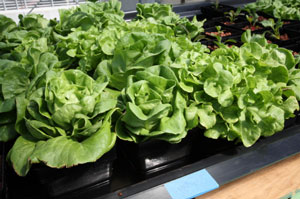
To understand the process of hydroponics, you have to know what plants need to thrive. Not only do they need water and nutrients, but they also need carbon dioxide and the right kind of light for photosynthesis - the converting of light energy into sugar - to grow and produce food.
By substituting special lamps for sunlight, you can grow herbs and vegetables in mineral-enriched water, and raise a garden anywhere - even underground. That's the beauty of hydroponics.
Once you understand how hydroponics works, you will find that there are many different hydroponics systems available. Here are two:
Wick System
This is by far the simplest and most affordable form of hydroponics available. You place your plants into a tray that is filled with perlite, rockwool or other medium. Place a nylon rope at the base of each root that dangles freely and extends beyond the bottom of the tray. Then you place the entire tray on top of a reservoir of water and nutrients. The nylon rope absorbs the water and the nutrients, wicking them up to the plant's roots.
Ebb and Flow System
The ebb and flow system has a tray that holds the plants (set in a medium, such as perlite, for stability) and a reservoir underneath containing water and mineral solutions. The water from the reservoir is pumped periodically into the tray and floods it, allowing the plants to absorb the water and nutrients. Gradually, the water drains back into the reservoir where it will eventually be pumped back up again.
Other Helpful Information
Not all hydroponic systems are the same. Learn which hydroponic system works best for you by clicking here.
Learn the basics of using LED lights for your system by clicking here.
Then There's Aquaponics
Aquaponics is a hydroponics system connected to a fish tank so the dirty fish water can feed the plants before being filtered and returned to the tank. All kinds of fish can grow in an aquaponics system, although tilapia is the most popular. The easiest way to start an aquaponics system is by purchasing a ready-made one.
Best of all, you can grow food indoors with an aquaponics system.


Recent Articles


-
What Does Electrotherapy Do?
Sep 08, 22 04:05 PM
 What does electrotherapy do? Look at it as a safer way to manage either temporary or chronic pain.
 -
Why Pine Needle Tea Is a Must Have in Your Preparedness Pantry
Sep 01, 22 06:02 PM
 Pine needle tea is a must have in your preparedness pantry. It's the best way to eliminate any harmful spike proteins you've been exposed to.
 -
Is Sourdough Gluten Free?
Aug 31, 22 02:55 PM
 Is sourdough gluten free? The short answer is no, if you have a several allergy to wheat or gluten, but it is more digestible.

New! Comments
Have your say about what you just read! Leave me a comment in the box below.